QUESTION ABOUT THERMOSTAT
Q1: What is an automotive thermostat?
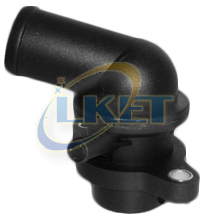
A1:The thermostat belongs to the cooling system of the car and is a key component in the engine cooling system. It is a temperature control valve installed in the engine coolant circulation path. According to the coolant temperature, it automatically adjusts its opening and closing status to control the coolant flow path and flow.
Q2: What is the function of the thermostat?
A2: To regulate engine temperature: Ensure the engine operates within the optimum operating temperature range (typically 80°C-100°C) to avoid overheating or overcooling.
To protect the engine: prevent overheating leading to cylinder distortion and lubrication failure; prevent overcooling leading to poor fuel atomisation and increased emissions.
Improve fuel efficiency: fast warm-up reduces cold start fuel consumption; precise temperature control optimises combustion efficiency.
Reduce emissions: Stabilising the operating temperature helps the three-way catalytic converter work efficiently, reducing emissions.
Optimise cooling efficiency: reduce coolant flow at low temperatures to speed up engine warm-up; increase coolant circulation at high temperatures to enhance heat dissipation.
Q3: What is an automobile cooling system?
A3:The automotive cooling system is a key component of normal engine operation, consisting of the radiator tank, radiator fan, water pump, thermostat and its assembly, water pipes and fittings. It ensures that the engine operates at the correct temperature by circulating coolant and dissipating heat through the radiator. Regular maintenance and inspection of the cooling system is key to engine life and performance.
Q4: What types of thermostats are there? What are the differences?
A4:Mechanical thermostat: low cost, high reliability, but slower response.
Electronic thermostat: fast response, precise control, support of complex strategies (e.g., dynamic adjustment according to load), but higher cost.
Q5: What is the working principle of the two types of thermostat?
A5:Mechanical thermostat: internal paraffin inductor, low temperature paraffin volume contraction, the spring pushes the valve to close, the coolant is only a small cycle (engine internal flow).
At high temperatures, the paraffin expands, overcoming the spring force to open the valve, and the coolant enters the large circuit (flowing through the radiator to dissipate heat).
Electronic thermostat: The coolant temperature is monitored by a temperature sensor, which sends a signal to the electronic control unit (ECU), which drives the motorised valve to precisely control the degree of opening, providing more flexible
QUESTION ABOUT OXYGEN SENSOR
Automotive Sensors: Functions, Types, Working Principles and Specific Locations Explained
Related Article