Say Goodbye to Power Lag and Soaring Fuel Consumption: The Faulty Oxygen Sensor, the "Invisible Fuel Thief" You Might Be Overlooking
Is your vehicle experiencing these issues: acceleration feels less responsive than before, with a noticeable lag when you press the accelerator hard; the fuel consumption figure on the dashboard has quietly increased, with a significant drop in driving range; occasional idling shakes, and the exhaust even carries a faint unusual odor... Often, owners blame spark plugs, carbon deposits, or fuel quality, overlooking a crucial yet inconspicuous component located deep in the exhaust system—the oxygen sensor. It is the long-lurking "invisible fuel thief" stealthily draining your power and money.
I. A Failed "Sense of Smell" for the Engine: When the Monitor Becomes the Saboteur
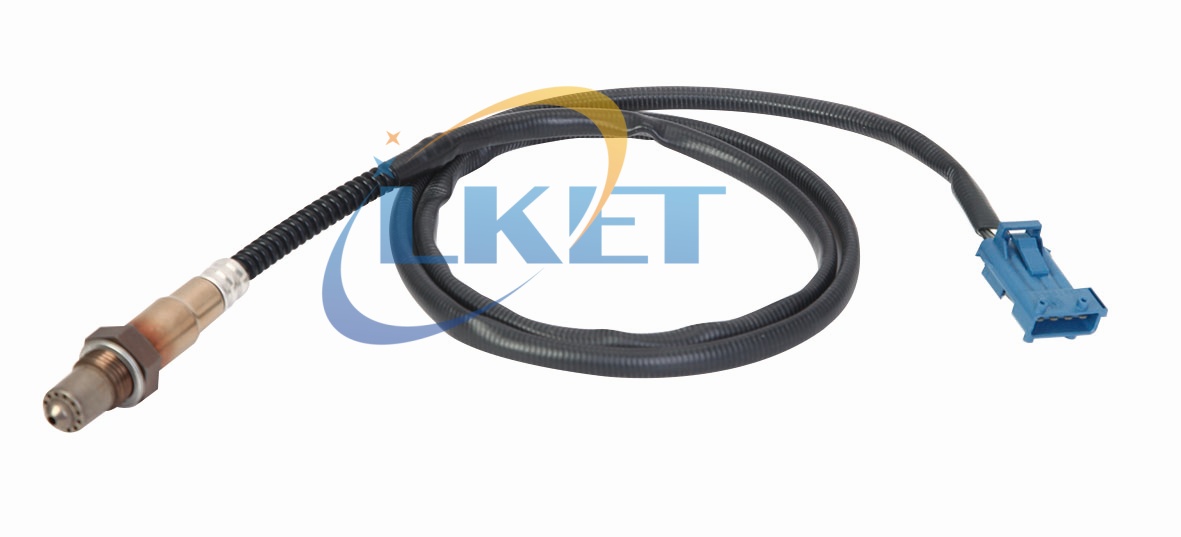
The oxygen sensor, hailed as the "closed-loop eye" or "air-fuel ratio sentinel" of the engine management system, is installed in the exhaust pipe. Its core function is to monitor the oxygen content in the exhaust gas in real-time and instantly feed precise electrical signals back to the Engine Control Unit (ECU). The ECU then dynamically adjusts the fuel injection volume hundreds of times per second based on this data, precisely controlling the air-fuel ratio near the theoretical optimum (approximately 14.7:1), ensuring efficient, clean, and smooth engine operation. However, once this "sentinel" fails, the entire fuel control closed-loop falls into chaos:
- Inaccurate Signals, ECU Goes "Blind": An aging sensor may respond sluggishly, failing to capture rapid air-fuel ratio changes; a sensor contaminated (fouled) by substances like carbon deposits, lead, sulfur, or silicon will output distorted or even fixed erroneous signals.
- Loss of Fuel Injection Control, Losing Both Power and Efficiency: Upon receiving erroneous signals, the ECU issues incorrect fuel injection commands. For example, if the sensor persistently falsely reports a "lean mixture," the ECU commands excessive fuel injection, causing an overly rich mixture. This not only leads to fuel waste and surging consumption but also results in incomplete combustion, reducing power, causing sluggish acceleration, and generating large amounts of carbon deposits that further worsen engine conditions. Conversely, falsely reporting a "rich mixture" leads to insufficient fuel injection, causing weak power, unstable idling, and even damage to the catalytic converter.
- Long-Term Damage, Costly Consequences: Long-term operation under incorrect air-fuel ratios not only continuously increases driving costs but also accelerates the wear and tear of expensive components like spark plugs and catalytic converters, potentially leading to exponentially higher repair costs.
II. Precisely Targeting the "Fuel Thief": The Technical Response of XX's New Generation Intelligent Anti-Fouling Oxygen Sensor
Addressing the pain points of traditional oxygen sensors—prone to failure and difficult to predict—leading automotive parts supplier LINK officially launches its new-generation SmartSense Series Intelligent Anti-Fouling Oxygen Sensor. This product aims to eliminate the "invisible fuel thief" at its root, safeguarding every bit of engine efficiency. Its core technological innovations include:
- Multi-Layer Composite Shield for "Poison-Proof" Performance: Utilizes a proprietary nano-scale precious metal composite coating and a porous ceramic protective layer. This structure effectively blocks and decomposes harmful substances found in fuel and oil additives (such as phosphorus, zinc, silicon), significantly enhancing resistance to chemical poisoning and physical clogging, ensuring long-lasting precision even under poor fuel quality and complex operating conditions.
- Built-In Self-Diagnostic Chip for "Predictive" Failure Detection: The sensor integrates a micro diagnostic module that continuously monitors its own performance degradation trend, such as changes in response time and signal amplitude. Before performance degrades enough to affect control precision, it can send an early warning signal to the ECU via the On-Board Diagnostics (OBD) system or notify the owner via connected smart terminals (e.g., vehicle-specific apps), transforming maintenance from "reactive repair" to "proactive prevention."
- Ultra-Fast Response and Wide-Range Measurement, Meeting the Demands of Modern Powertrains: Utilizing a new micro-cavity design and high-performance heating elements, the sensor reaches optimal operating status within 20 seconds after a cold start and achieves millisecond-level signal response across the engine's entire operating range. This perfectly adapts to the demands of modern engines, especially in hybrid vehicles where frequent start-stop and rapid load changes occur, ensuring the air-fuel ratio is optimally controlled at every moment.
- Precise Fit for Full Vehicle Lineup, Plug-and-Play Compatibility: Every SmartSense sensor undergoes rigorous electrical performance and emissions matching tests before leaving the factory, ensuring its output characteristics are perfectly compatible with the original ECU. No software flashing or lengthy learning periods are required; optimal engine performance is restored quickly after installation.
III. More Than a "Replacement," It's an "Efficiency Renewal": Tangible Improvements for Your Vehicle
"We conducted comparative tests," stated the Technical Director at LINK. "In a vehicle experiencing approximately 15% increased fuel consumption and sluggish acceleration due to an aging oxygen sensor, after replacing it with the SmartSense Series sensor, the vehicle's city-combined fuel consumption returned to normal levels within a week. Throttle response improved noticeably, and the driver could clearly feel the 'return' of power." For vehicle owners, choosing a high-performance, high-reliability oxygen sensor means:
- Restored Fuel Economy: Regaining the expected fuel efficiency, leading to significant long-term fuel cost savings.
- Recovered Power Performance: Rediscovering smooth, responsive acceleration, enhancing driving pleasure and safety.
- Cleaner Emissions Compliance: Ensuring efficient operation of the catalytic converter, keeping vehicle emissions compliant, which is beneficial for both the environment and emissions testing.
- Protection for System Health: Preventing minor issues from escalating into major ones, safeguarding core engine components, and extending overall vehicle lifespan.
IV. Professional Advice: When Should You Pay Attention to Your Oxygen Sensor?
- Consider Mileage and Vehicle Age: The typical design life of a conventional oxygen sensor is usually between 80,000 to 120,000 kilometers. Beyond this range, even if the malfunction indicator lamp (MIL) is not illuminated, performance may have degraded significantly.
- Watch for Typical Symptoms: If you notice abnormally high fuel consumption, significantly reduced power, unstable idling, or worsening emissions test data, be sure to include the oxygen sensor in your diagnostic checks after ruling out other causes.
- Utilize OBD Diagnostics: Regularly reading your vehicle's OBD data stream using professional tools to monitor the change frequency and amplitude of the oxygen sensor signal voltage is an effective way to assess its health.
Conclusion: In today's world of increasingly sophisticated automotive technology, the humble oxygen sensor remains the core hub linking fuel economy, power output, and emission cleanliness. Eliminating the trouble caused by the "invisible fuel thief" is an investment in your vehicle's health, an upgrade to your driving experience, and a fulfillment of environmental responsibility. The launch of LINK's SmartSense Series Intelligent Anti-Fouling Oxygen Sensor aims to provide every vehicle owner with a simpler, more reliable way to sustainably protect this driving pleasure and efficiency.
How to diagnose a faulty car thermostat with simple checks?
Rapid Warm-up in Extreme Cold: How High-Efficiency Heater Control Valves Drastically Reduce Winter Cabin Warm-up Time
Related Article