What Are the Performance Differences and Application Comparisons of Different Materials for Automotive Thermostats?
author: W
2025-08-22
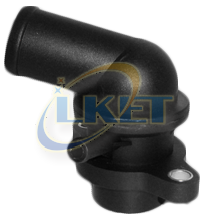
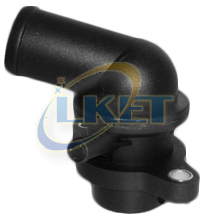
As the "intelligent valve" of the automotive cooling system, the core function of a thermostat is to automatically adjust the circulation path by sensing the temperature of the coolant, ensuring that the engine always operates within the optimal temperature range (usually 80-105℃). The choice of material directly determines the response speed, sealing performance, service life and applicable scenarios of the thermostat. Currently, mainstream materials are mainly divided into three categories: metallic materials, polymer materials and ceramic materials, which have significant differences in performance characteristics and application scenarios.
I. Metallic Materials: The Traditional and Reliable "Cornerstone of Industry"
Metals are the earliest materials used in thermostats, mainly including brass, stainless steel, aluminum alloy, etc. They still dominate the mid-to-low-end vehicle and heavy-duty vehicle markets. Their core advantages lie in high mechanical strength and stable high-temperature resistance, which can withstand the long-term high pressure (usually 1.0-1.5bar) and temperature fluctuations in the engine cooling system.
In terms of specific performance, brass materials, relying on excellent thermal conductivity (thermal conductivity of approximately 109W/(m·K)), can achieve rapid response in temperature sensing and also have a certain degree of corrosion resistance, making them suitable for the regular working conditions of ordinary family cars; stainless steel (such as 304 material) enhances corrosion resistance by 3-5 times through the passivation effect of chromium-nickel alloy, which can be adapted to ethanol-gasoline coolants with a relatively high ethanol ratio and is widely used in commercial vehicles and off-road vehicles; aluminum alloy materials have become a transitional choice for new energy vehicles due to their lightweight advantage (density is only 1/3 of brass), but their alkali resistance is poor and they need to be used with special coolants.
However, the limitations of metallic materials are also obvious: first, the thermal expansion coefficient is low (about 12-18×10⁻⁶/℃), resulting in insufficient linearity of valve opening and prone to temperature fluctuations of "on-off suddenly"; second, the processing cost is high, complex structures need to be realized through precision casting, and the weight is large (about 2-3 times that of polymer materials), which is not conducive to the lightweight and energy consumption reduction of the entire vehicle.
II. Polymer Materials: The "Innovative Choice" in the Lightweight Era
With the increasing requirements for automotive energy conservation and emission reduction, polymer materials represented by nylon 66 and PPS (polyphenylene sulfide) have become the mainstream development direction relying on lightweight and design flexibility. The density of such materials is only 1.3-1.5g/cm³, which can reduce the weight by more than 50% compared with metals, directly reducing the engine load and fuel consumption.
In terms of core performance, polymer materials have unique advantages: first, the thermal expansion coefficient is controllable (can be adjusted to 20-35×10⁻⁶/℃ by adding glass fiber reinforcement), which can realize the gradual adjustment of valve opening, make the engine temperature rise more smoothly, and reduce cold-start wear; second, they have excellent corrosion resistance, can withstand the long-term erosion of ethylene glycol coolant and high-temperature water vapor, and the service life can reach 80,000-100,000 kilometers, which is 20% higher than that of metallic materials; third, the injection molding process can realize the integrated production of complex structures, such as integrating temperature-sensing elements and seals to reduce assembly errors.
But polymer materials also have obvious shortcomings: their long-term high-temperature resistance is limited. Ordinary nylon 66 will have performance degradation when the temperature is above 120℃, and even PPS materials with high-temperature resistance can hardly exceed 200℃ in continuous working temperature, so they cannot be adapted to the high-temperature area of turbocharged engines; in addition, their rigidity and impact resistance are weak, and they are prone to brittle fracture in low-temperature environments (below -30℃), which needs to be improved through material modification (such as adding tougheners).
III. Ceramic Materials: The "Performance Benchmark" in the High-End Field
Ceramic materials (mainly alumina ceramics and silicon nitride ceramics) are new materials applied in high-end vehicles and racing cars in recent years, and are known for their extreme stability and ability to withstand extreme environments. Their core advantages are: excellent high-temperature resistance (alumina ceramics can withstand high temperatures of 1600℃ for a long time), which is fully suitable for the high-temperature working conditions of turbocharged engines; extremely low thermal conductivity (about 20-30W/(m·K)), which can effectively isolate external temperature interference and improve the measurement accuracy of temperature-sensing elements to ±1℃; at the same time, the ceramic surface is smooth and has strong chemical inertness, almost no reaction with the coolant, and the service life can reach more than 150,000 kilometers.
In terms of structural design, the processing accuracy of ceramic materials can reach 0.01mm, which can realize the micron-level sealing between the valve and the valve seat and reduce the risk of coolant leakage; their low-density characteristic (about 3.6g/cm³) is not as good as that of polymer materials, but better than that of metals, and their rigidity is 2-3 times that of metals, which can withstand higher system pressure.
However, the popularization of ceramic materials faces two major bottlenecks: first, the brittleness problem—poor impact resistance, which is prone to fracture due to vibration or impact during assembly and use; second, high cost. Ceramic forming requires complex processes such as sintering and precision grinding, and the unit cost is 5-8 times that of metallic materials. At present, they are only used in high-end models of luxury brands (such as BMW M series, Porsche 911, etc.) and racing cars.
IV. Core Considerations for Material Selection and Development Trends
From the perspective of practical application scenarios, material selection needs to comprehensively evaluate the engine type, service environment and cost budget: economical family cars tend to use brass or glass fiber-reinforced nylon with high cost performance; commercial vehicles and off-road vehicles mostly use stainless steel materials due to complex working conditions; new energy vehicles (especially extended-range vehicles) have begun to try the composite structure of PPS and aluminum alloy to balance lightweight and high-temperature resistance; high-end performance vehicles gradually adopt ceramic materials to improve system stability.
In terms of future development trends, polymer materials will break through the high-temperature resistance bottleneck through nano-composite modification (such as adding graphene), aiming to increase the continuous working temperature to above 250℃; ceramic materials will develop towards the direction of "ceramic-metal composite", improving the brittleness problem through surface metallization; at the same time, the research and development of intelligent materials (such as shape memory alloys) is also advancing, which is expected to realize the adaptive adjustment of thermostats and further optimize the thermal management efficiency of engines.
What are the advantages of a thermostat
How to Tell if Your Oxygen Sensor Is Failing
Related Article

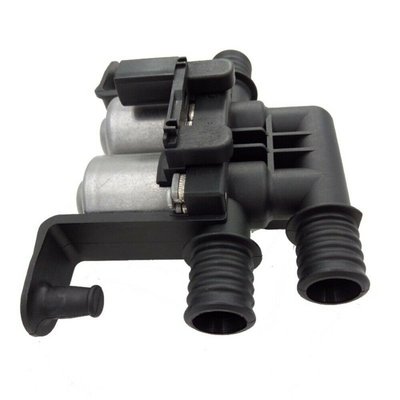
This guide outlines five key indicators for selecting a high-quality heater control valve: core materials (brass/stainless steel), sealing performance (FKM/EPDM seals), control method and accuracy, compatibility and craftsmanship, and brand reputation with warranty. By evaluating these factors, buyers can ensure durability, prevent leaks, and secure reliable winter heating for their vehicle.
Buying Guide: Five Key Indicators to Identify a High-Quality Heater Control Valve
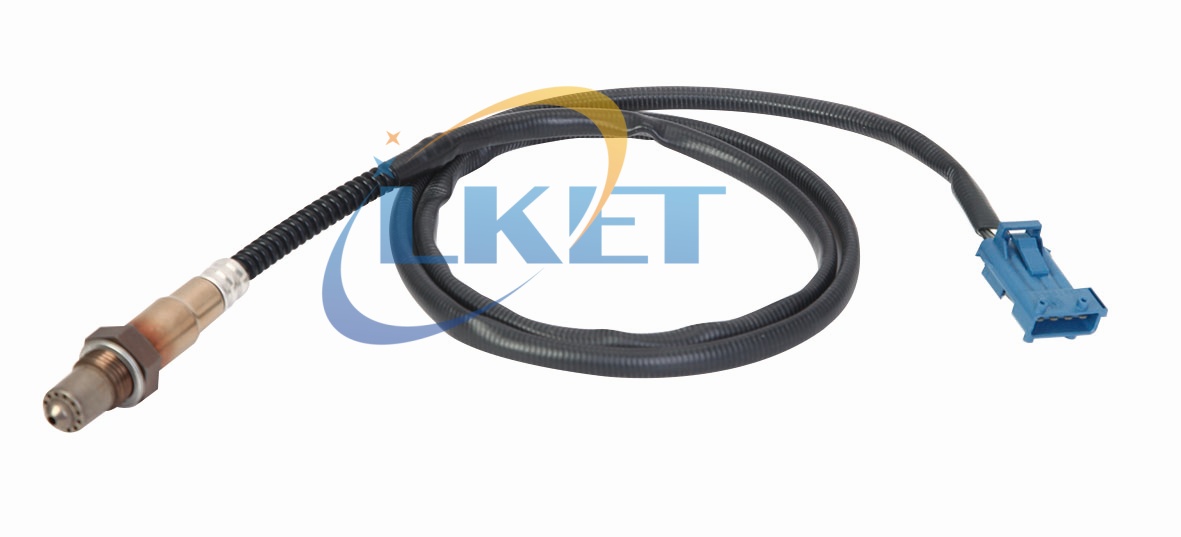
This article compares OEM and brand-name oxygen sensors, highlighting key factors for choosing between them. It explains that OEM parts ensure perfect compatibility and stability at a higher cost, while reputable brand-name parts offer significant savings and comparable performance for out-of-warranty vehicles. The guide recommends selecting reliable brands based on warranty status, vehicle model, and usage needs.
OEM Parts vs. Brand-Name Parts: How to Choose a Reliable Oxygen Sensor?